











What Do Stars Symbolize? Star Meaning, Spirituality & Jewelry
A Selenichast Symbolism Guide
A star can be a point of light, a sense of direction, or a private reminder to keep reaching. Its meaning changes with the form, the story, and the person who chooses it.
People have looked to stars for practical direction and imaginative meaning for centuries. Their light has helped travelers orient themselves, while their patterns have inspired stories, symbols, and personal keepsakes. That is why star symbolism can feel both universal and deeply individual.
So, what do stars symbolize? Most often, they are associated with hope, guidance, dreams, inspiration, and protection. Yet no star symbol has one fixed definition. Its shape and context matter—and so does the meaning a person brings to it.
Star Symbol Meaning Chart
Use this quick reference to compare four familiar celestial forms. The meanings are common contemporary associations rather than universal definitions.
| Star Symbol | Common Meaning | Personal Interpretation |
|---|---|---|
| Five-Point Star | Hope, balance, inspiration | A centered reminder to stay hopeful or pursue a goal |
| Shooting Star | Wishes, dreams, new beginnings | A brief moment of possibility or a decision to begin again |
| North Star | Guidance, direction, purpose | A steady reference point, person, value, or path |
| Moon and Star | Harmony, intuition, dreams | A balance between inner feeling and outward direction |

What Do Stars Symbolize?
When people ask what do stars represent, the simplest answer is light with direction. Stars are visible in darkness, distant yet recognizable, and often used as points of orientation. Those qualities shape the most familiar star meaning: hope when circumstances feel uncertain, guidance when the path is unclear, and aspiration when a goal still feels far away.
The symbolic meaning of a star is not identical everywhere. A star can appear in religious imagery, national emblems, family stories, art, or jewelry, and each setting changes how it should be read. The five ideas below are broad associations, not rules.
Hope
A star remains visible against the night, so it often symbolizes hope—the idea that even a small light can make darkness feel less complete.
Guidance
Because people have used stars to orient themselves, the star became a natural emblem of direction, wise counsel, and finding one's way.
Dreams and Wishes
Stars sit beyond ordinary reach. In stories and everyday language, they therefore suggest wishes, ambition, and dreams that invite us to look beyond the present.
Inspiration
A star can represent the goal that draws someone forward. It may stand for a creative idea, a future self, or a purpose worth returning to.
Protection
In some traditions, star forms have been worn or displayed as protective symbols. Today, that association is often expressed as a wish for safe passage or care—not a guarantee of protection.

The Spiritual Meaning of Stars
The star spiritual meaning is usually expressed through metaphor. A star may suggest inner light, faith, a higher purpose, continuity, or the feeling of being connected to something larger than everyday life. In this sense, looking upward becomes a way of looking inward.
Some people understand stars through a particular religious or cultural tradition. Others simply use them as private symbols of reassurance or reflection. Neither interpretation is universal. A star does not guarantee guidance, protection, or a future outcome; it gives visible form to an idea the wearer or viewer already values.
Star Symbolism Across History and Cultures
Long before digital maps, people learned to recognize the night sky as a source of orientation and seasonal knowledge. Polaris appears close to the north celestial pole and remains in roughly the same place in the northern sky, which is why the North Star became such a powerful image of steadiness and direction.
People also connected visible star patterns into constellations and gave them names, characters, and stories. Different communities interpreted those patterns in different ways. Across decorative arts, star shapes have appeared as sacred signs, political emblems, protective motifs, marks of rank, and expressions of beauty.
This variety is central to celestial symbolism: there is no single historical meaning shared by every star. A symbol should be understood within its own cultural setting rather than detached from it. Contemporary jewelry often uses stars more personally—as reminders of hope, direction, memory, or an important relationship.
Different Star Symbols and Their Meanings
The number of points, the direction of movement, and the celestial elements surrounding a star can all shift its meaning. These four forms answer different emotional needs.
Five-Point Star Meaning
A simple five-point star is often associated with hope, balance, achievement, and inspiration. Its even, radiating form can feel centered and complete. However, five-point stars also appear in specific religious, national, and cultural contexts, so shape and setting should always be considered together.
Shooting Star Meaning
A shooting star commonly symbolizes wishes, dreams, sudden possibility, and new beginnings. The real sight is a meteor rather than a star, but its brief sweep of light makes the metaphor especially vivid: notice the moment, name the hope, and be willing to move.
North Star Meaning
The North Star meaning centers on guidance, purpose, direction, and constancy. Because Polaris can help an observer locate north in the Northern Hemisphere, a North Star symbol may stand for a value, person, or destination that helps someone stay oriented through change.
Moon and Star Symbolism
Moon and star symbolism often brings together two complementary ideas: the moon's changing phases can suggest intuition, emotion, and life's cycles, while the star suggests hope or direction. In contemporary jewelry, the pair is often read as harmony between an inner world and an outward path.
Crescent-and-star forms also have distinct historical, civic, and religious uses. Those meanings should not be reduced to a generic aesthetic. If you want to explore the jewelry motif in greater depth, Selenichast's moon and star jewelry guide looks more closely at symbolism and styling.

Why Stars Hold Personal Meaning Today
A familiar symbol becomes personal when it is attached to a memory. One person may see a star as the dream that shaped a career. Another may connect it with a loved one, a night spent far from home, or the courage required to begin again.
Stars are especially suited to private meaning because they can be both steady and distant. They may mark:
- a goal that still matters;
- a milestone such as graduation, a move, or a new role;
- a person whose support offered direction;
- a shared memory beneath the night sky;
- a gentle reminder to continue after uncertainty.
That flexibility explains why the same symbol can carry different emotions without losing its recognizable character. The star offers a language; the wearer supplies the story.
Star Jewelry Meaning: Why People Wear Star Jewelry
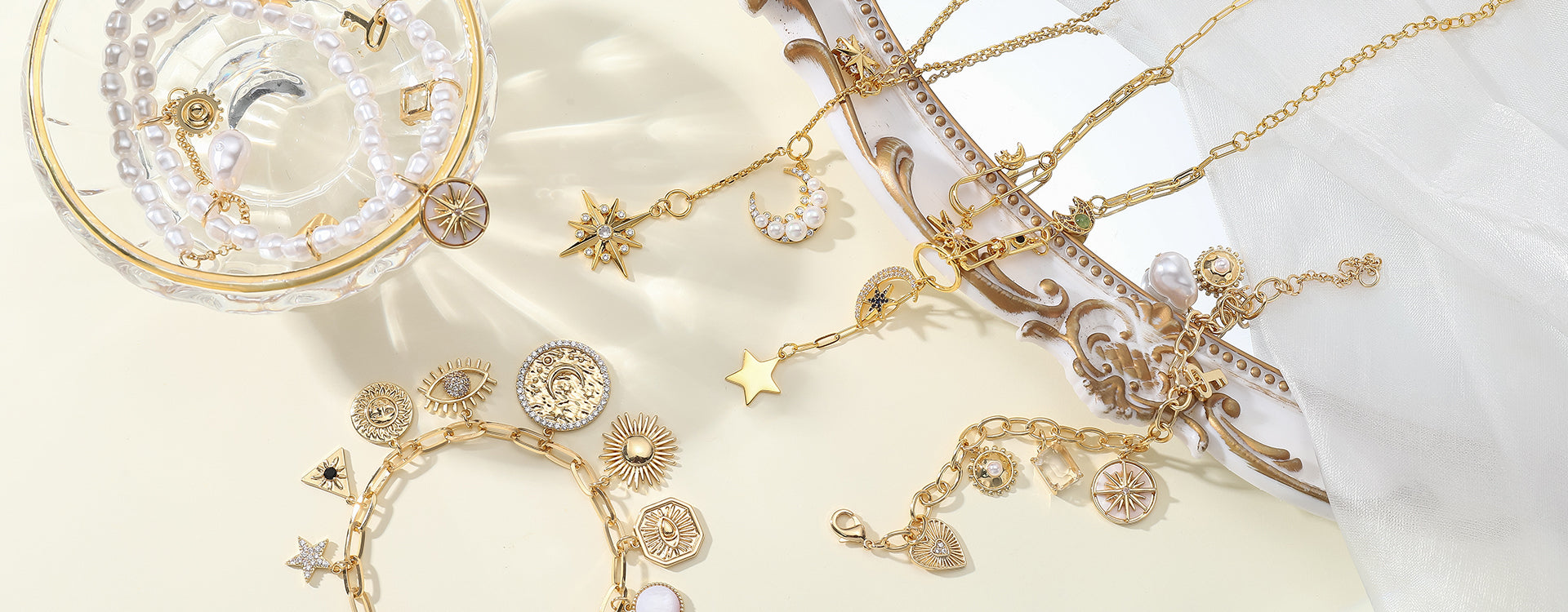
Star jewelry meaning begins with the symbol but becomes more specific through design. A North Star pendant can express direction. A shooting-star curve can suggest momentum or a fresh start. A small five-point star may simply be an everyday reminder of hope.
Placement changes the effect as well. moon and star necklaces are often worn close to the heart, while star earrings repeat the motif as points of light around the face. Layered pieces can feel like a tiny constellation; one restrained charm can feel more intimate.
For readers who enjoy the wider night-sky aesthetic, celestial jewelry can combine stars with moons, planets, or constellations. The value is not in claiming that a piece changes events. It is in choosing a visible reminder of an idea that already matters.
Selenichast's celestial jewelry guide offers a broader look at moon, star, and sun motifs, while the moon and star jewelry collection shows how those symbols translate into wearable form.

Star Jewelry as a Meaningful Gift
A star makes a thoughtful gift because its message can be specific without being overly prescriptive. A short note can explain exactly what the symbol means in that relationship.
Birthday
A star can celebrate the next chapter of someone's story—especially when paired with a message about a wish, a dream, or a bright year ahead. Browse ideas by occasion in Selenichast's birthday jewelry gifts.
Graduation or a New Beginning
A North Star or shooting-star motif can acknowledge both direction and movement: “Trust what guides you, and keep going.” It is a natural theme for graduation jewelry or a new job, home, or journey.
Friendship
For a close friend, a star can represent steady support across distance or change. A personal note matters more than a universal definition; Selenichast's best-friend gift collection offers a relevant place to begin.
Encouragement
A small star can say, “I believe in where you're going.” This works for recovery from a difficult season, a brave decision, or any moment when quiet encouragement feels more fitting than celebration.
When gifting symbolic jewelry, include the intended meaning in your own words. That sentence turns a familiar celestial motif into a keepsake connected to a real person and moment.
Star Symbolism FAQs
What do stars symbolize spiritually?
Spiritually, stars are often associated with inner light, hope, guidance, faith, purpose, and connection to something larger than oneself. Interpretations vary by person and tradition, so these meanings are symbolic rather than guaranteed spiritual effects.
What does a shooting star symbolize?
A shooting star commonly symbolizes a wish, a fleeting opportunity, change, or a new beginning. Its brief appearance gives it a sense of urgency and possibility. Although “shooting star” is the familiar name, the visible streak is actually a meteor.
What does a five-point star symbolize?
In general contemporary use, a five-point star may represent hope, inspiration, balance, excellence, or achievement. It also appears in specific religious, civic, and national contexts, so its meaning should be read alongside its orientation, design, and setting.
What does the North Star represent?
The North Star represents guidance, direction, purpose, and a steady point of reference. The symbolism comes from Polaris's position near the north celestial pole, which allows observers in the Northern Hemisphere to use it to find north.
Why are stars popular in jewelry?
Stars are visually simple, emotionally flexible, and easy to wear at many scales. They can carry a private meaning—hope, a goal, a loved one, or a new path—without requiring the wearer to explain the story to everyone who sees the piece.
One Symbol, Many Stories
A star can be hopeful, directional, spiritual, celebratory, or quietly personal. Its meaning becomes clearest when the form fits the story: the North Star for a steady reference point, a shooting star for a wish in motion, or a moon-and-star pairing for the conversation between feeling and direction.
The most meaningful star is not necessarily the brightest or most elaborate. It is the one that brings a particular person, promise, memory, or destination back into view.
Editorial Sources
Factual notes about Polaris, constellations, and meteors were reviewed against the following educational sources. Symbolic interpretations vary by culture and individual.
Leave a comment