








How to Identify Antique Jewelry: A Beginner’s Guide
To identify antique jewelry, examine its marks, fastenings, construction, materials, design, and documented history together. Antique generally means at least 100 years old, but an old-looking finish or decorative clasp cannot establish that age by itself. Begin with clear photographs and careful observation, then compare several consistent clues with reliable references. If the evidence conflicts, or you need authentication or valuation, consult a specialist before cleaning, repairing, buying, or selling the piece.
A flower-shaped brooch in a family jewelry box can raise more questions than its delicate petals suggest. Was it made a century ago, inherited more recently, or created to resemble an older design? Learning how to identify antique jewelry starts with separating what you can observe from what you can prove.
This beginner-friendly antique jewelry identification guide shows you where to look for jewelry hallmarks, how to examine clasps and construction, how to recognize broad era clues, and when a professional opinion is the sensible next step. The same process also helps anyone wondering how to identify vintage jewelry, although vintage pieces do not necessarily meet the 100-year antique threshold.
Antique vs. Vintage vs. Costume Jewelry
Antique describes age, while vintage-inspired describes design. That distinction matters whenever you read a seller’s description. A newly made pendant can have an old-fashioned silhouette without being an old object.
| Term | What It Describes | What to Verify |
|---|---|---|
| Antique | Generally, jewelry at least 100 years old. | Evidence supporting its age, rather than appearance alone. |
| Vintage | Jewelry from an earlier period; often used for pieces at least 20 years old, although seller conventions vary. | The stated decade or approximate manufacturing date. |
| Estate | Previously owned jewelry, which may be recent, vintage, or antique. | Its actual age. Previous ownership does not establish antiquity. |
| Vintage-inspired | Modern jewelry borrowing design features from the past. | Current materials and construction, with no assumption of historical origin. |
| Costume | A category commonly associated with fashion jewelry and nonprecious materials. | Age separately from materials. Costume jewelry can also be vintage or antique. |
These labels can overlap. An inherited costume brooch might be both estate and vintage. An antique jewel may also imitate a still earlier artistic period. Ask when the object was made, what it is made from, and whether its components belong together.
One clue suggests. Several consistent clues support. Professional examination confirms.
A clasp, hallmark, patina, or design motif becomes useful when it agrees with the rest of the object.
How to Identify Antique Jewelry: 7 Things to Check
Start with a well-lit surface, a soft cloth beneath the piece, and a magnifier or 10× jeweler’s loupe. Handle it gently. Your first goal is to build an accurate description.
| Clue | What It May Suggest | What It Cannot Prove Alone |
|---|---|---|
| Marks and stamps | Metal standard, maker or sponsor, assay office, or date information. | That every component is original or the mark is genuine. |
| Clasps and findings | A fastening style to compare with documented examples. | The date of the complete piece. |
| Construction | Manufacturing methods, alterations, and repairs. | That handmade means antique or machine-made means modern. |
| Materials and cuts | Details consistent or inconsistent with a proposed period. | Age from color, sparkle, or weight alone. |
| Design and wear | A possible stylistic period and history of use. | Authenticity based on patina or an old-fashioned motif. |
| Documentation | Recorded ownership, purchase, or earlier appearance. | A manufacturing date unless the evidence supports it. |
On a phone, swipe across the tables to read every column.
Photograph Every Side
Take one image of the complete piece, then close-ups of its back, edges, clasp, settings, and marks. Include a ruler in a separate photograph for scale. For earrings, photograph both pieces and their backs.
Keep the original, unfiltered images. Strong sharpening can turn a worn letter into something it is not.
Find Marks and Stamps
Look inside ring bands, behind brooches, on pendant bails, and near necklace or bracelet closures. Record every visible character, symbol, and surrounding outline.
A purity stamp, maker’s mark, and formal hallmark answer different questions. Their meaning depends on country, period, and context.
Examine Clasps and Hinges
On a brooch, study the hinge, pin stem, and catch together. On a necklace, inspect the clasp and connecting rings. Differences in color or wear may point to repair or replacement.
Record what you see before interpreting it: “clasp is brighter than chain” is more useful than “clasp is fake.”
Inspect Construction
Look underneath decorative elements. Note solder joints, open or closed backs, engraving, casting seams, stone settings, and parts that appear altered.
A pendant may have begun as a brooch, or a ring may have been resized. Alterations can remove marks and mix components from different dates.
Describe Materials and Cuts
Write “transparent blue stone in a claw setting” if you do not know whether it is sapphire, glass, or another material. Precise observation is safer than premature identification.
Old-style cuts can support research, but stones may be reused or newly cut in historical styles. Synthetic stones also occur in authentic period jewelry.
Assess Wear and Repairs
Notice where wear occurs: moving links, raised edges, ring undersides, or areas around clasps. Compare these locations with the rest of the piece.
Tarnish and patina are not clocks. Storage, cleaning, use, and applied finishes all affect appearance.
Check Provenance and Comparable Examples
Ask for dated receipts, earlier photographs, repair records, or documentation connecting the object to a maker. Keep family stories with these records, while distinguishing recollection from independently supported evidence.
Compare items with the same function and similar construction. Museum records are useful because they often identify dimensions, materials, and approximate dates. The V&A’s illustrated jewelry history offers documented examples from several periods.
Jewelry Stamps and Maker’s Marks: What Do They Mean?
Jewelry stamp meanings depend on the full mark and the system in which it was used. A number may indicate stated fineness, while a symbol or initials may identify a maker, sponsor, retailer, assay office, or registration. This is why jewelry hallmarks identification requires more than typing one isolated character into a search box.
| Mark Type | Possible Meaning | Research Note |
|---|---|---|
| 925 | Stated sterling silver fineness. | Used on modern jewelry too; it does not prove age. |
| 585 or 14K | Stated 14-karat gold fineness. | Check accompanying marks, location, and construction. |
| 750 or 18K | Stated 18-karat gold fineness. | A fineness mark is not a manufacturing date. |
| 835 or 800 | May indicate a silver fineness standard in some contexts. | Identify the country and complete set of marks before interpreting it. |
| Initials or symbol | May be a maker’s, sponsor’s, retailer’s, or trademark mark. | Compare the exact lettering, cartouche shape, and documented examples. |
| Date or assay symbol | May identify an assay office or date within a formal hallmarking system. | The surrounding symbols and country-specific reference chart are essential. |
When identifying a maker’s mark, treat the letters or symbols stamped on the jewelry as one part of a complete mark. There is no universal chart covering every maker and country. Photograph the whole group: a letter inside a shield-shaped outline may mean something different from the same letter inside an oval.
Use a reference for the proposed country and period. Antique Jewelry University’s hallmark resources explain how marks can offer clues about metal content, origin, maker, and sometimes date.

How to Date Vintage Jewelry by Clasp Type
When people search how to date vintage jewelry by clasp type, they often expect one clasp to reveal one date. In practice, a fastening can narrow the possibilities, but designs continued across periods and damaged clasps were often replaced. Examine the clasp as one component of a larger object.
| Clasp Type | What to Look For | Dating Clue and Limitation |
|---|---|---|
| C-clasp | An open, curved catch receiving a brooch pin. | Found on many older brooches. Compare the hinge and pin; the catch alone does not establish a date. |
| Trombone clasp | A sliding tubular mechanism securing a brooch pin tip. | Useful when comparing some documented European brooches. Regional context and the complete mechanism matter. |
| Safety catch | A closing element that helps prevent a pin from slipping free. | The exact mechanism matters, and a replacement may be newer than the brooch. |
| Box clasp | A tongue fitting into a box-shaped housing. | Used across different periods. Examine decoration, marks, and connection points. |
| Barrel clasp | A barrel-shaped closure, often with two sections that screw together. | A broad identification clue rather than a narrow date marker. |
| Spring ring | A circular closure with a small spring-operated opening. | Appears on older and modern jewelry; its presence does not prove recent manufacture. |
| Lobster clasp | An elongated, spring-operated closure with a small lever. | Common on modern chains, but it may be a later replacement on an older pendant or necklace. |

An Engraved Locket on a Newer Chain
- The locket has hand-engraved flowers and wear around its hinge.
- The chain has a bright lobster clasp and appears less worn.
- The locket and chain therefore need separate examination.
- The newer-looking chain does not date the locket, and the older-looking locket does not make the chain antique.
Jewelry Era Clues: Victorian, Art Nouveau, Edwardian, and Art Deco
Design helps you choose where to investigate next. These descriptions are broad reference points, with overlap between dates, countries, makers, and later revivals.
Victorian Jewelry
Floral forms, lockets, sentimental motifs, and changing fashions appear across this long period. A heart, serpent, hand, or flower can guide research, but no motif dates a piece by itself.
Art Nouveau Jewelry
Look for fluid outlines, botanical subjects, expressive female forms, and artistic uses of enamel, glass, horn, and gemstones. The overall composition matters more than one butterfly or flower.
Edwardian Jewelry
Fine openwork, garlands, bows, and lace-like effects can point research toward Edwardian design. Similar details also appear in later revival jewelry, so examine materials and construction.
Art Deco Jewelry
Structured geometry, symmetry, and contrasting colors or materials are common starting clues. Anyone learning how to identify Art Deco jewelry should also study the setting, metalwork, stones, and documentation.

A style name is not an age certificate. “Art Deco-inspired” may describe a new piece. Even genuine Art Deco jewelry must be dated individually to determine whether it has crossed the 100-year antique threshold.
How to Spot a Modern Reproduction or Misleading Claim
A modern reproduction can be beautifully made and honestly sold. The problem arises when style language is presented as proof of age. To spot a fake or misleading jewelry claim, compare the seller’s wording with the physical evidence.
- Ask for a date, not “timeless” language. Terms such as antique-style, antiqued, heritage, and vintage-inspired describe appearance.
- Check whether wear is logically distributed. Uniform darkening in protected and exposed areas may be an applied finish.
- Compare front and back. A convincing period motif on the front can sit on obviously modern construction.
- Inspect the complete mark. A familiar-looking stamp can be incomplete, copied, or unrelated to the claimed maker.
- Request evidence for confident claims. A seller should be able to explain the basis for a stated maker, date, or material.
None of these observations proves deception by itself. Use them to decide what requires closer research or independent examination.
What If Your Jewelry Has No Marks?
Unmarked jewelry can still be old, authentic, and worth researching. Marks may be worn, removed during resizing or repair, or absent because of the object’s origin and manufacturing context.
Record “no visible marks” rather than assuming none ever existed. Continue with the fastenings, construction, materials, design, and provenance. Missing marks neither authenticate nor disqualify a piece.
Common Antique Jewelry Identification Mistakes
- Calling every old piece antique. A decades-old necklace may be vintage without being 100 years old.
- Using weight as proof. A heavy piece is not automatically old, solid gold, or valuable.
- Rejecting synthetic or imitation stones. Their presence does not automatically make a period jewel modern.
- Trusting a signature without checking it. Compare the exact mark and object with documented examples.
- Assuming every part has one date. A replacement clasp, altered setting, reused stone, or converted brooch may combine different periods.
- Equating age with value. Identification and appraisal answer different questions.
When to Ask an Antique Jewelry Specialist
Seek a specialist when you need more than a tentative identification, particularly before a significant purchase, sale, restoration, or insurance appraisal. Choose someone experienced in the relevant period and jewelry category.
Explain whether you need help with age, maker, materials, alterations, or value. Ask what the examination covers and whether you will receive written findings. An exact year may remain uncertain even after careful inspection.
- Object: type, dimensions, weight, and clear photographs.
- Marks: exact characters, symbols, outlines, and locations.
- Fastenings: clasp, hinge, pin, or earring-back details.
- Construction: settings, joints, back, and possible conversion.
- Condition: damage, loose components, and signs of repair.
- History: receipts, family photographs, and ownership information.
- Comparisons: documented similar examples and their sources.
- Question: what remains uncertain and why you need to know.
Enjoying Antique Style in Modern Jewelry
Historical jewelry can clarify what you love wearing: a curved petal, painted enamel, symbolic motif, or pendant that holds something personal. Those preferences can shape a modern jewelry wardrobe without making a claim about age.
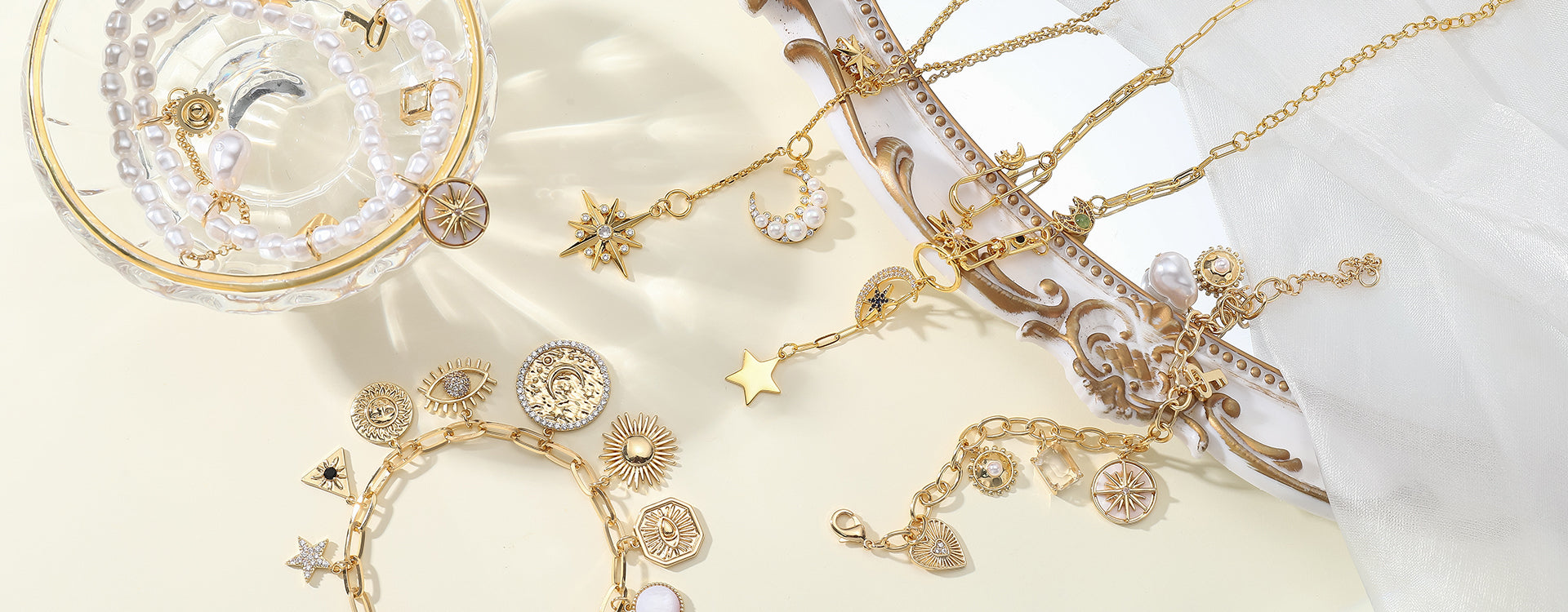
For a botanical direction, explore flower necklaces. Wear an intricate floral pendant against a simple neckline so its silhouette remains visible. If you prefer lighter winged motifs, butterfly necklaces echo the nature-led curves often admired in romantic jewelry design.
For a keepsake format, enamel locket necklaces bring color and personal meaning into everyday styling. These collections offer modern inspiration and are not presented as authenticated antique pieces.
FAQs About Identifying Antique Jewelry
How can I tell if my jewelry is antique?
Compare its marks, fastenings, construction, materials, design, and history. Look for several consistent clues rather than one apparent sign of age. Ask a qualified specialist to examine an important piece in person.
How old does jewelry have to be to be antique?
Antique generally means at least 100 years old. The threshold moves with time, so a period-inspired design or approximate style label does not establish the age of a particular object.
How do I identify vintage jewelry?
Use the same evidence-based process: photograph the piece, record stamps, examine its fastening and construction, compare its design with documented examples, and check provenance. A vintage item may be old without yet qualifying as antique.
Can antique jewelry have no markings?
Yes. Marks may be absent, worn, or removed during alteration. An unmarked piece requires research through its other details; missing stamps prove neither authenticity nor a lack of it.
Can you date jewelry by its clasp?
A clasp can support a possible period, but many mechanisms remained in use and replacements are common. Examine the hinge, clasp, connecting points, and complete piece together.
Does a 925, 585, or 14K stamp mean jewelry is antique?
No. These are stated metal-fineness marks, not dates. Similar marks appear on modern jewelry, and any stamp needs to be read in its full context.
How can I tell if jewelry is real at home?
At home you can record marks, construction, wear, and seller documentation, but these observations may not confirm metal or gemstone identity. Avoid destructive scratch or acid tests on an unidentified piece and seek professional testing when the answer matters.
Is all antique jewelry valuable?
No. Age is one factor. Materials, maker, condition, originality, rarity, provenance, and buyer demand can affect value. Personal meaning may also matter regardless of resale price.
Leave a comment